From my experience, when asked whether they are religious or believe in God, 95 % of the people answer something like “no, but I think there must be something else”. A frequently heard argument against believing in God is that there can be no all-loving and all-good God when looking at the disasters, cruelties, humanitarian catastrophes and suffering that through history have and still are striking man and the world. If God is omnipotent surely he is also responsible for the disasters. Right?
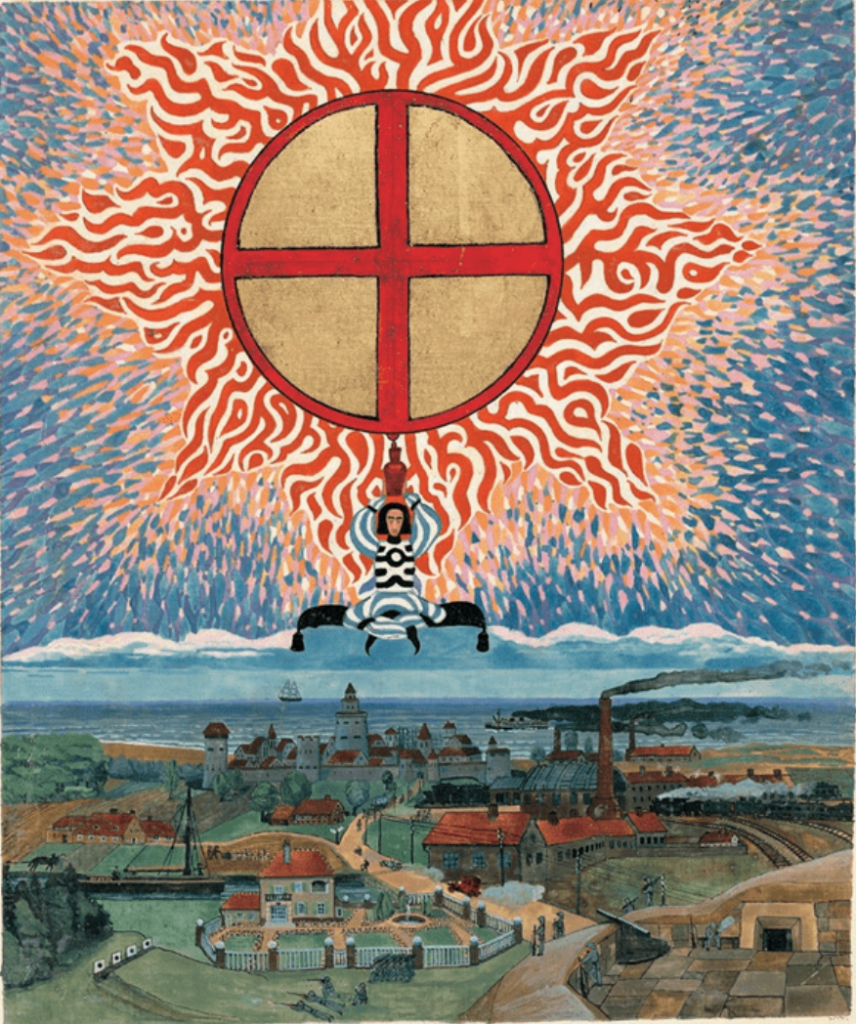
There is a renewed interest in Jung’s Answer to Job, in the nature of immoral behavior and in what can be said about the nature of God and in the state of Christianity. The Essentia Foundation has today published a documentary by Hans Busstra which includes an interview with myself on this topic. Given the disasters that are currently unfolding in different places in the world the renaissance of these topics is timely.
If we drop the dogmas of the church for a moment and think about the “something else that there must be” we may learn important things from investigating the nature of this “something-else-God” through a psychoanalytic lens. Because, whatever else this God is, God is also a mental/psychological phenomenon.
In 1952 the psychiatrist Jung wrote a rather famous book called Answer to Job. In this book he argues that in the bible story the faithful Job is more moral and conscious than God, who tormented him without justification under the influence of Satan and did not get why that was wrong.
From the book of Job it seems that God knows no morality in the same way that humans do. In psychoanalytic terms God appears as the raw material of the psyche, unprocessed and not morally filtered by consciousness. In Freud’s terms the Id. This God in personified form acts as if he has no consciousness. Furthermore, in other parts of the bible, Yahweh shows uncontrolled rage and “all-good, all-bad” behavior. Yahweh’s dramatic storms and all-good-all-bad behavioral patterns are similar to the patterns and dramatic mental storms that make Borderline patients and their environment suffer so much. For acquiring morality, according to Jung, God needs Man.
 Dr Hans van den Hooff
Ha Hans Bij het YouTube gesprek over Job en de gedachten over de relatie tussen persoonlijk leed en God/Jaweh moest ik denken aan een verhaal in een boekje van Delphine Horvilleur die rabbi is na een opleiding tot dokter. Ze begeleidde de dienst van de Charly Hebdo doden en daar gaat dit over. Tat H

>
LikeLike